Birth
Born in Chingiztau.
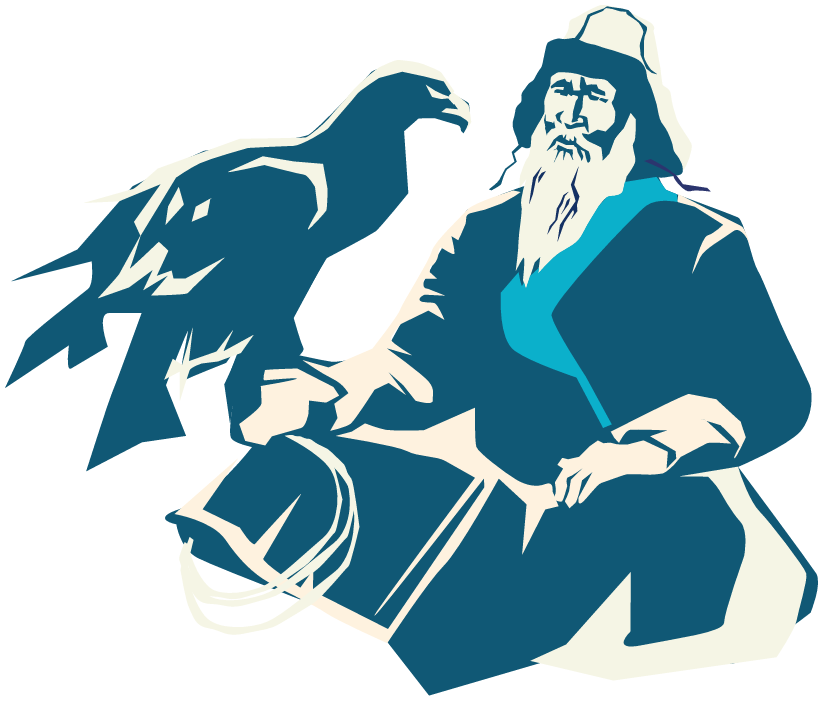
1858 — 1931
A great Kazakh poet, thinker, historian and composer — Abai’s spiritual heir.
Born in Chingiztau.
After his father’s death he grew under Abai’s care and turned toward art and learning.
He independently studied languages, history, religion, music and literature.
He spoke on the fate of the people, land, education and rights.
Performed the hajj and visited libraries in Istanbul and Paris.
His books on genealogy, religion and morality began to circulate.
His famous narrative poems were published.
His principal philosophical work took shape.
Executed during the repressions.
His name was rehabilitated and his legacy returned to the public.
Shakarim was born in 1858 at the foot of the Chingiztau mountains.
His father Kudaiberdy was Kunanbai’s eldest son and Abai’s brother.
Orphaned early, Shakarim was raised and mentored by Abai.
The cultural world between Chingiztau and Semey broadened his outlook.
Poetry, music, history and religious thought converged in this environment.
«The mark of humanity is conscience, honour and justice.»
— Shakarim
An influential clan leader.
Kunanbai’s eldest son.
Poet and philosopher.

Preserved his father’s legacy and passed it on.

A figure whose fate reflects the heavy mark of the repression era.
Helped collect and publish manuscripts, songs, memoirs and archival evidence.
Shakarim took an active part in public life.
Named among intellectuals who supported the appeal defending the rights of the Kazakh people.
Historical source
National renewal, education and public responsibility resonated with Shakarim’s thought.
Context of the era
Soviet pressure intensified, threatening traditional communities and independent thinkers.
Archival materials
The poet was executed, and his work could not be openly discussed for many years.
Memoirs and studies
«Justice is the pillar of the people.»
— Shakarim
His worldview was shaped by Abai, Eastern thinkers and world literature.
His mentor and spiritual father, whose ideas on humanity, knowledge and justice deeply shaped Shakarim.
«Be a human being!»
Through Hafiz, Fuzuli and Navoi he explored the bond between poetry and spirituality.
«The unity of word and mystery»
Through Pushkin, Tolstoy and Western thinkers he explored translation, morality and human nature.
«A horizon of universal thought»